
Food Labels
Intro
Raise your hand if you know how to read a nutrition (food) label. Of course, I’m not suggesting that you can’t read; instead, I’m asking if you know how to interpret the information on that label to understand how it impacts your overall dietary intake throughout the day. If, upon reflection, you’ve determined that you don’t usually read food labels, don’t worry, you’re not alone. According to the National Association of Sports Medicine, a 2018 survey revealed that two-thirds of participants didn’t use the information regularly. In case you’ve recently decided that you might want to shift to the 1/3 of the population using the information at your disposal to make informed decisions, this post is for you.
Food labels are regulated by the FDA and required to include certain information. They’re required to include the name of the product you’re consuming, the package quantity, the manufacturer’s name and address, an ingredients list, a statement on common allergens in the food, and a nutrition facts label. It’s also common to see Primary Display Panels on the front of packaging for quick reference. These include the name and net quantity of the product.
The FDA requires that food labels include several pieces of information:
The total servings in a container
The serving size
Total number of calories per serving
Total fat, saturated fat, and trans fat (all in grams)
Milligrams of cholesterol
Milligrams of sodium
Total carbs in grams
Total dietary fiber in grams
Sugars and added sugars in grams
Total grams of protein
Percent Daily Value (%DV) and amounts of vitamin D in micrograms, and calcium, iron, and potassium in milligrams
Unless the label says otherwise, the information included is for a single serving, not the entire package. Therefore, the first information to look for is the serving size and the total number of servings in the container. That means if a package contains more than one serving but you consume all of it in one sitting, you need to multiply the serving size information by the total number of servings to get the correct consumption details.
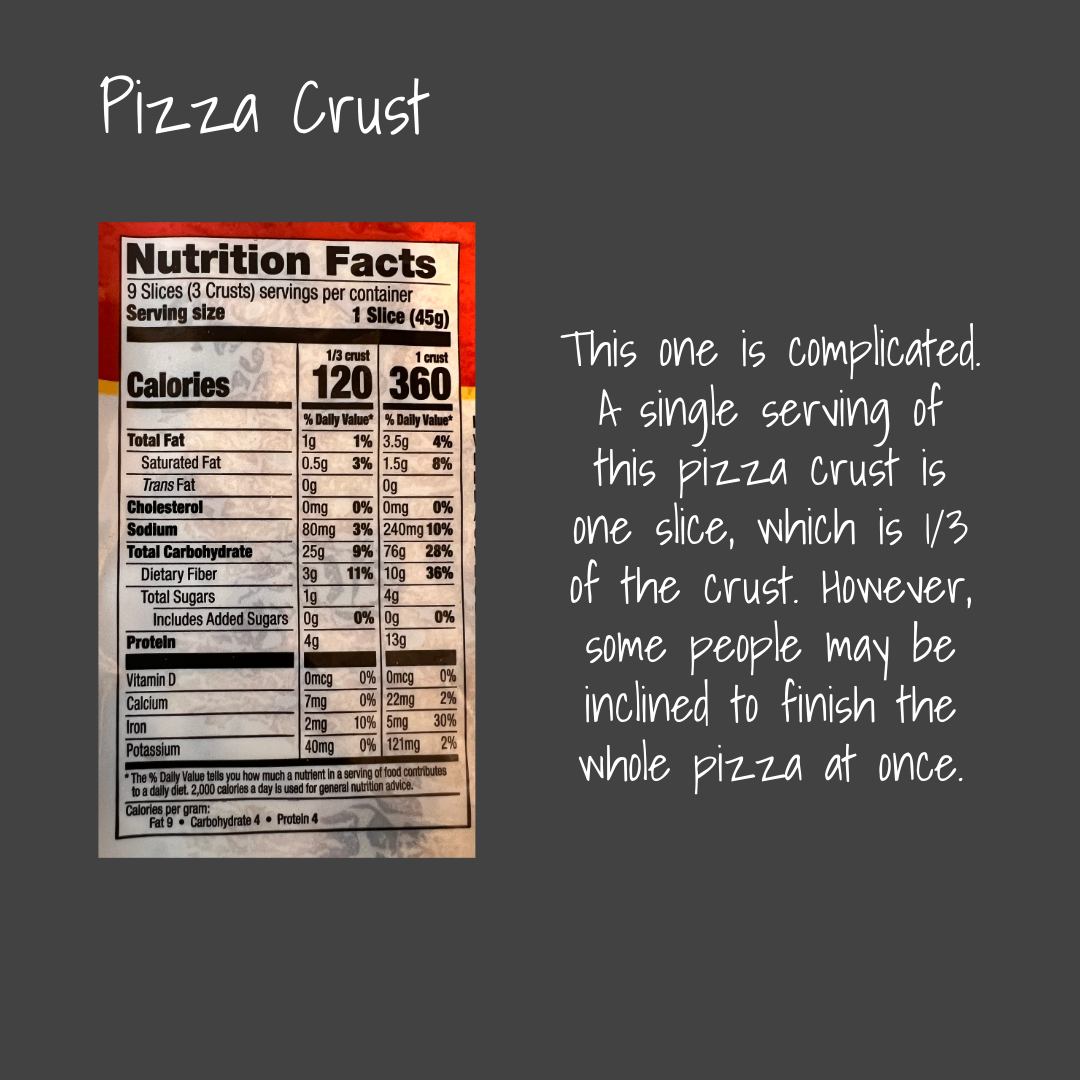
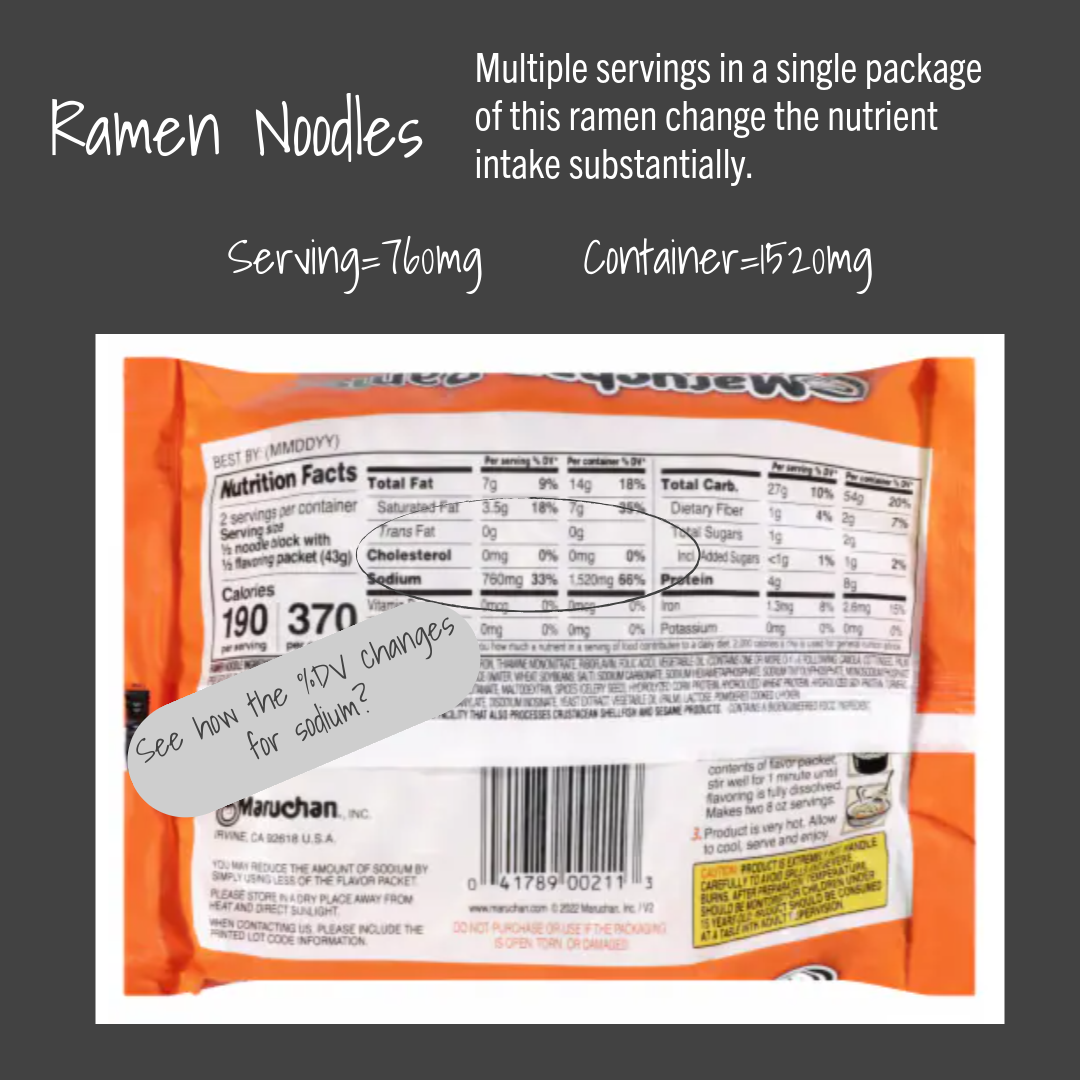
Products that include between one and three servings in total are required to list the nutritional information for consuming the whole package. It should be noted that serving sizes don’t always reflect the healthiest levels of consumption, or even a recommended consumption amount. Instead, the serving size reflects what people are typically thought to consume in a single serving.