
Food Labels pt. 2
Understanding Context
Food labels are drafted within the context of a 2,000-calorie diet. This means that if you’re restricting calories or adding calories to your diet, the percent daily value information included on the label will also need to be adjusted. That information can help you determine how much of a particular nutrient is included in a single serving.
Using the percent daily values as a guide is a quick way to help determine whether or not you’re getting a low or high amount of a nutrient in your food. Foods containing 5% or less of their daily value are considered low, while foods containing more than 20% of their daily value are considered high. Percentages falling between 6% and 19% contain moderate amounts of that nutrient. The Academy of Nutrition and Dietetics suggests consumers aim for 5% or less for sodium, cholesterol, saturated fat, and trans fat, and 20% or more for vitamins, minerals, and fiber.
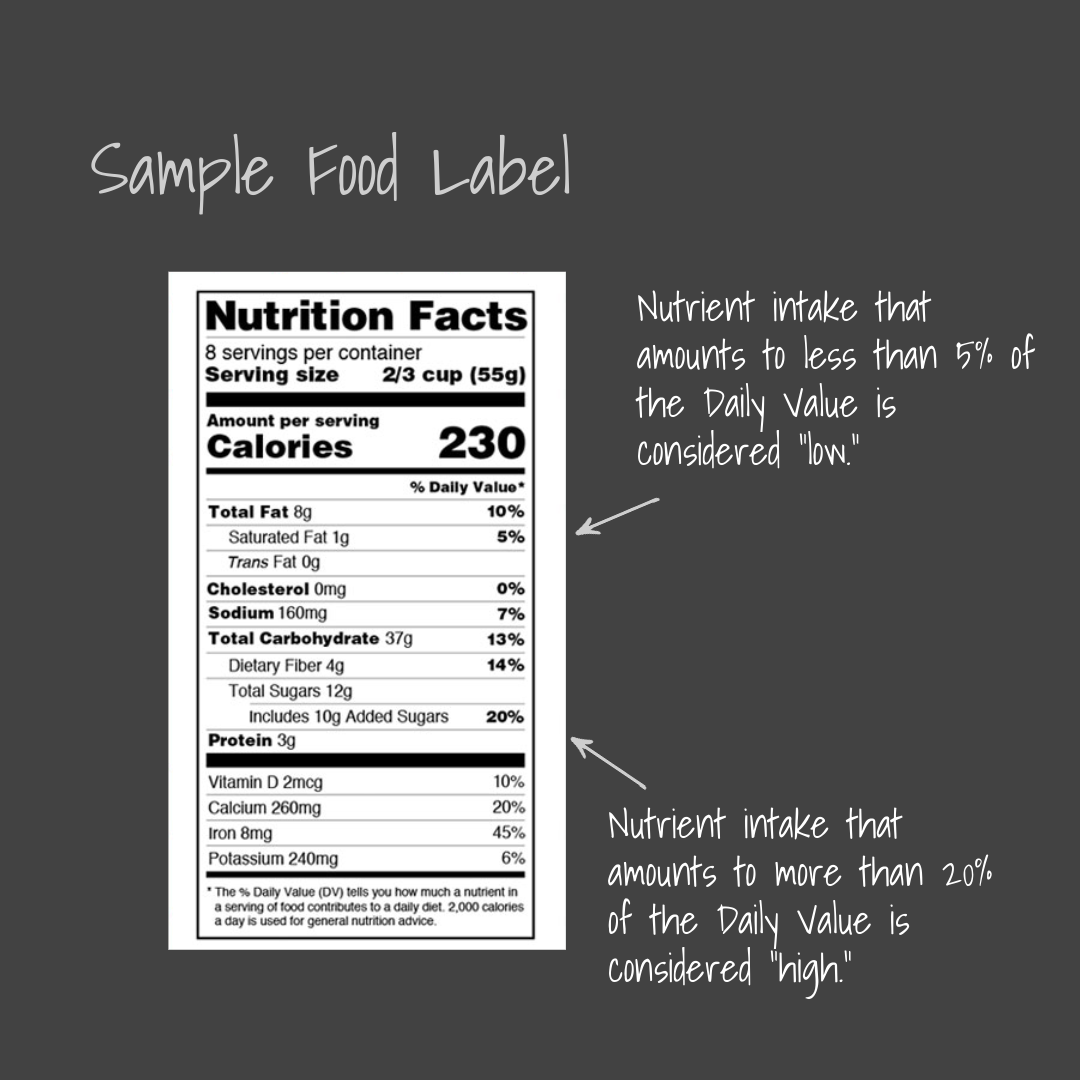
Finally, percent daily values aren’t listed on food labels for trans fat, total sugar, or protein. This is because there is no recommended daily allowance for trans fats (they should be avoided altogether) or total sugar (remember from the Carbs post that natural sugars found in fruits include the vitamins and minerals of those fruits, which we need for optimal health). Added sugars do include percentages, as they should be limited to just 10% of total daily calories. Regarding protein, most adults in the US don’t struggle to meet the minimum daily intake recommendations.
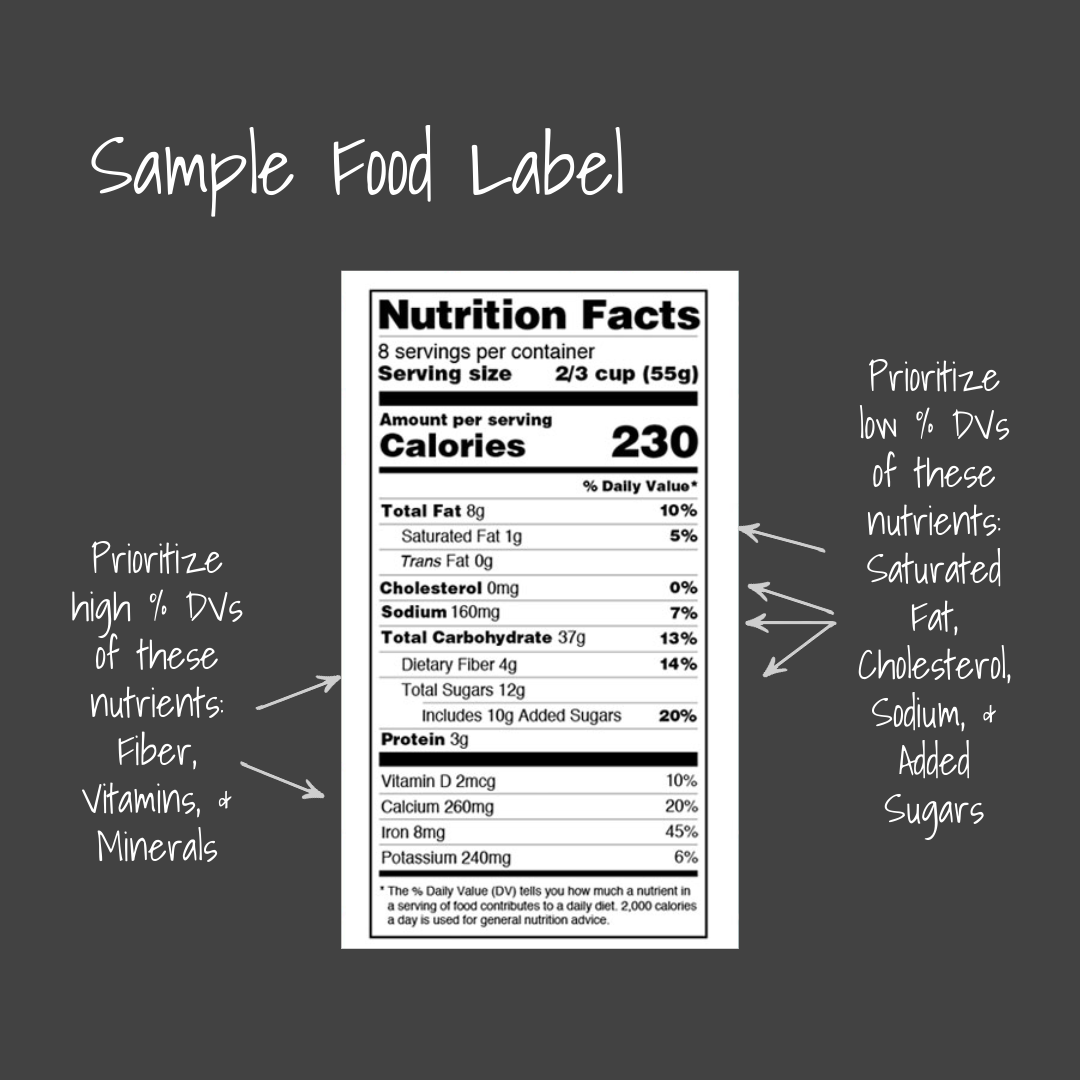
Test your understanding of food labels by asking yourself a few quick questions as you look at the images below.
How many calories are there in this food? Is that a low amount or a high amount based on a 2,000-calorie diet? (Change the total calories in your diet if they differ from 2,000 and ask again.)
Does this food have a lot of carbs?
Is this food low or high in fiber?
How many grams of sugar or added sugar are in this food or beverage? Is the amount considered low or high?
How much protein is in this product?
Is this a low-fat or high-fat product? Does this product include trans fat?